SURCAM® C-TYPE
DENTAL IMPLANT
Controlled Stability with Parallel Thread Design
The C-Type Advantage
Classic Parallel Geometry. Predictable Performance.
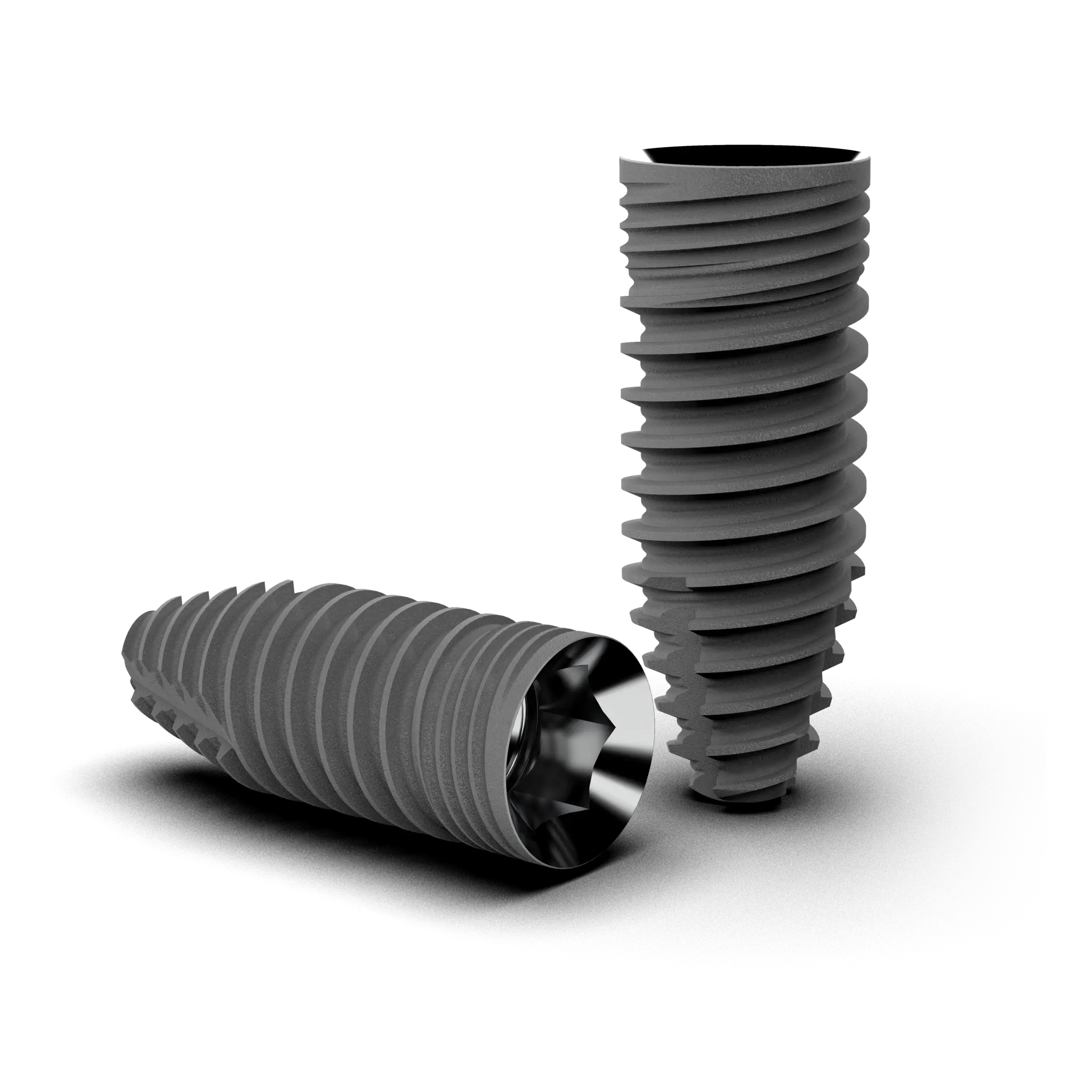
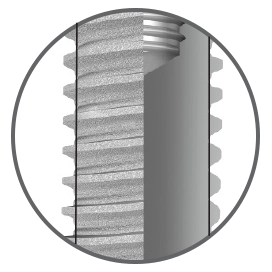
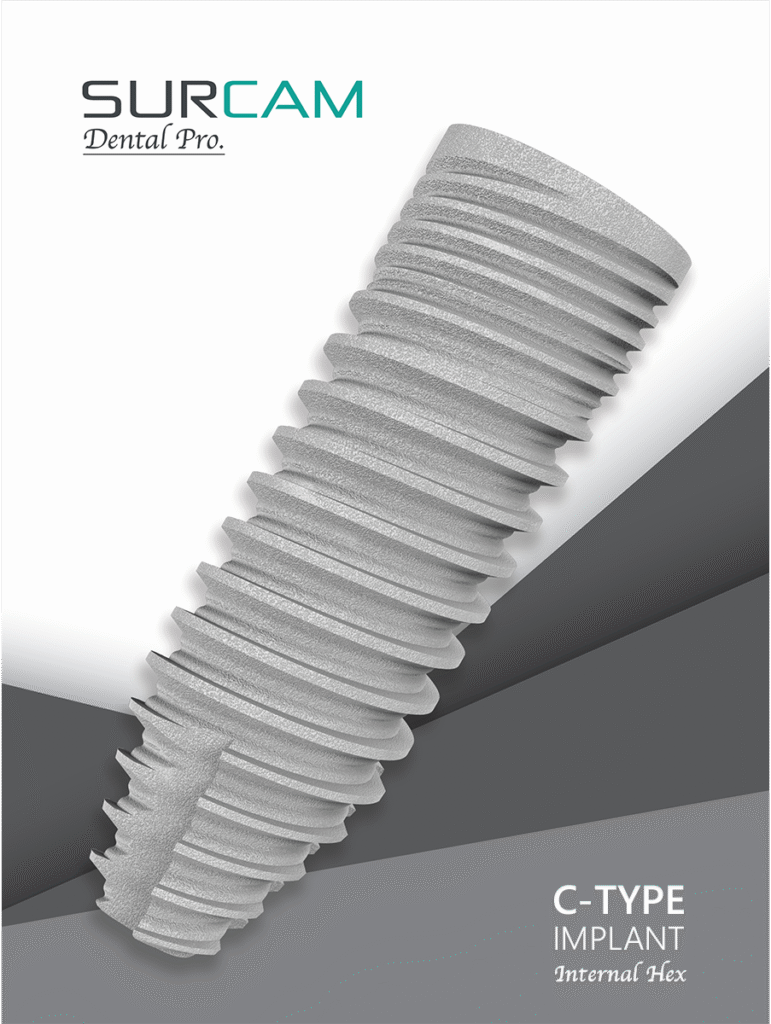
The Surcam® C-Type Dental Implant features a cylindrical body with parallel threads engineered for controlled insertion and balanced load distribution across various bone densities.
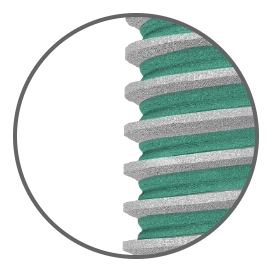
Its macro-design enhances primary stability in hard bone while minimizing excessive pressure in softer bone conditions. The dual multi-thread configuration promotes vascularization and improved healing response, while cervical micro-threads support crestal bone preservation.
The C-Type is a dependable solution for clinicians seeking mechanical precision with consistent restorative outcomes.
- Available Diameters: Ø3.3 | Ø3.75 | Ø4.2 | Ø5.0 mm
- Available Lengths: 8 | 10 | 11.5 | 13 | 16 | 18 mm (depending on diameter)
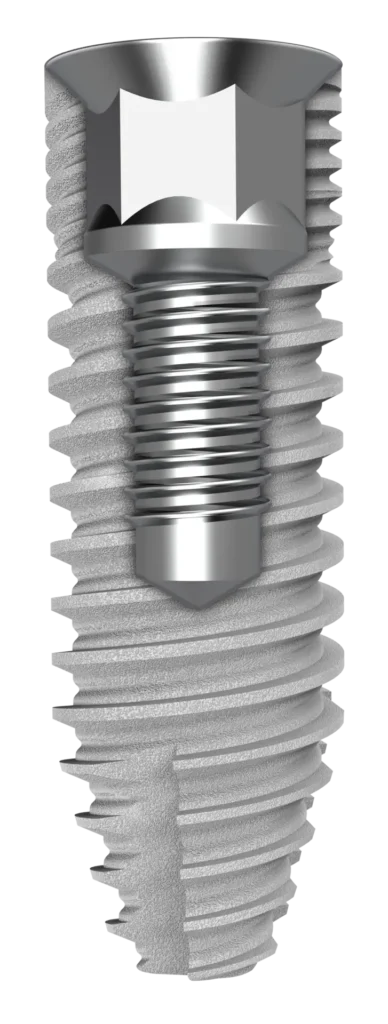
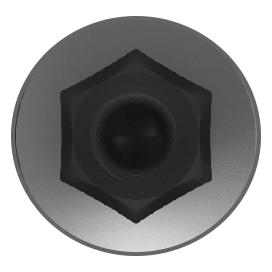
- Connection: Internal Hex 2.42 mm (Standard Platform)
- Material: Titanium Grade 5 (Ti-6Al-4V ELI)
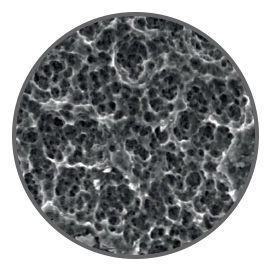
- Surface: SLA (Sand-Blasted, Large-Grit, Acid-Etched)
- Insertion Torque: ≤ 50 N·cm
![]()
![]()
![]()
![]()
![]()
C-TYPE Dental Implant
Key Features & Clinical Benefits
Internal Hexagon – 2.42 mm
Precision internal connection ensures secure prosthetic seating and long-term mechanical reliability.
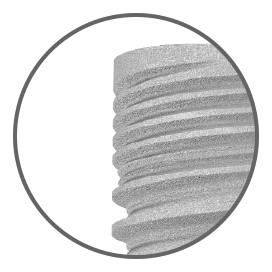
Cervical Micro-Threads
Promote crestal bone stability and soft-tissue integration.
Parallel Thread Design
Cylindrical body enhances control during insertion, particularly effective in dense bone.
SLA Surface Treatment
Micro-roughened surface enhances osseointegration and long-term implant success.
Dual Multi-Thread Geometry
Creates micro-spaces that support blood flow and improve biological response.
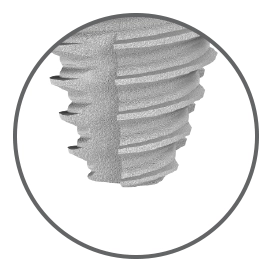
Anchoring Apex
Facilitates guided insertion and improved apical fixation.
Catalogs and resources
C-TYPE Implant Catalog
Comprehensive guide detailing C-Type implant geometry, parallel thread macro-design, and 2.42 mm internal hex connection specifications across available sizes. Covers design concept for controlled stability in hard and mixed bone types, clinical indications, full size chart (Ø3.3–Ø5.0 mm, 8–18 mm), and diameter-specific drilling protocols